
2026 is a good time to look toward Venezuela. The country is experiencing a stage of opening. The interest of international investors, including those from the United States and Canada, has grown again. Opportunities are opening up in a market that is rebuilding itself and needs capital, technology, and good ideas.
VENFORT Lawyers assists foreign investors who wish to establish their company in Venezuela. This article explains, in a simple and practical way, how the process works, what the law protects, what type of company is best suited for each case, and what steps you must follow to invest on a firm legal basis.
The objective is simple: for you to understand the complete path before walking it.
What Venezuelan law offers the foreign investor
Venezuela has a law that regulates productive foreign investment. This law grants important guarantees to the investor:
- Equal treatment to that of a domestic investor. The law does not allow discrimination based on the origin of capital.
- Right to send profits abroad. The investor can remit their earnings every year.
- Right to repatriate the invested capital after a minimum holding period of two years.
- In most sectors, a foreigner may own 100 % of the company.
Clear rules for recording the investment and protecting its value against future regulatory changes.
Certain strategic sectors—oil, gas, mining, and telecommunications—are subject to special rules, which are currently combined with the licensing regime established by the United States for its own sanctions system. For all other productive and commercial activities, the process is open and flexible.
A useful pointCreating and operating a company does not require a large amount of capital. The minimum amount set by law applies only when the investor wishes to formally register their investment to access special guarantees, such as capital repatriation. In addition, there are reduced amounts for small and medium-sized enterprises.
What type of company is best for you
Not all investments need the same structure. Before incorporating, it is advisable to choose between these options:
- Corporation (Inc.). It is the most widely used corporate form in Venezuela, equivalent to the corporation (public limited company). It offers limited liability to partners, flexibility to bring in new investors, and is the preferred structure for banks and regulatory agencies to operate normally.
- Limited Liability Company (LLC). Useful for smaller or family-owned operations, with fewer formalities in the transfer of shares, although with less recognition in larger-scale operations.
- Branch of a foreign company. It allows a company already incorporated in another country to operate directly in Venezuela without creating a new legal entity. It is a less used path, because it generally implies greater asset exposure for the parent company and slower recognition procedures.
- Joint venture with a local partner. Recommended when the project requires operational knowledge of the Venezuelan market, already established institutional relationships, or access to assets that demand local participation. It requires a carefully drafted partnership agreement with clear exit and conflict resolution rules.
In the vast majority of cases we handle, the corporation is the most efficient option. Therefore, we focus the rest of this guide on that vehicle.
How to set up a company. Step by step
The main process for establishing a Corporation is as follows:
- Choose the name and the corporate purpose of the company. The purpose must accurately describe the actual economic activity, because the registrations and sectoral permits that the company will need to process depend on it afterward.
- Draft the articles of incorporation and bylaws. This document defines the partners, capital, board of directors, and internal operating rules.
- Register the company in the Commercial Registry. With this registration, the company is legally established.
- Obtain the Tax Information Registry (RIF), which is the company's tax number.
- Have the accounting books certified by the Commercial Registry.
- Process the company's government registrations with the appropriate agencies according to its activity.
When there are foreign partners, the corresponding authorization is also processed before the Autonomous Service of Registries and Notaries (SAREN). And if you wish to register your investment under the foreign investment law, the registration is carried out before the competent authority.
This entire process can be initiated remotely. You do not need to be in Venezuela to get started. VENFORT handles the paperwork in the country and keeps you informed at every stage.
What documents do you need to prepare
To begin, you must deliver:
- Company name options, in order of preference.
- Copy of the passport and identity document of each partner.
- In the case of foreign partners, the documentation and authorization required by law.
- The names of the people who will make up the board of directors, with their positions.
- The company's tax address in Venezuela.
- The share capital and the corporate purpose.
With this information, VENFORT prepares all the legal documents.
After incorporation: the obligations that are usually forgotten
Many investors focus so much on the incorporation process that they leave procedures for later which, if delayed, generate administrative sanctions or block banking operations. It is advisable to keep them in mind from the start:
- Registration with SENIAT for compliance with Income Tax (ISLR) and, if the activity requires it, Value Added Tax (VAT).
- Employer registration with the Venezuelan Institute of Social Security (IVSS), mandatory as soon as the company hires its first worker.
- Registration with the National Institute of Training and Socialist Education (INCES) and contributions to the housing and habitat regime, required according to the number of workers and the activity.
- municipal economic activity license, which is processed through the mayor's office corresponding to the company's tax domicile and is distinct from the commercial registry.
A properly incorporated company that neglects these obligations ends up, in practice, just as vulnerable as a poorly incorporated company. That is why we include this monitoring as part of our support services, not as a separate service.
How long does it take
- Company incorporated and ready to operate: 5 to 10 business days after receiving all documentation.
- Foreign partner authorization before SAREN: 2 to 6 weeks.
- Post-incorporation tax and labor registrations: between 1 and 3 additional weeks, depending on the agency and the activity.
From the first day you have a clear plan and realistic dates.
A note for the US and Canadian investor
If you invest from the United States or Canada, there is good news. During 2026, the United States has issued general licenses that relax various restrictions and facilitate business with Venezuela, first in the oil sector and later in the financial system. The climate is more favorable than in previous years, and several international companies are already looking toward the country again.
Even so, the compliance framework remains specialized and changes rather frequently. Each investor must confirm that their specific activity is covered by the applicable license and that it complies with the rules of their own country. VENFORT takes care of the Venezuelan side of the process and clearly indicates which points should be reviewed with a compliance advisor in their home country. Thus, your investment moves forward on a secure basis, with no surprises later on.
Common mistakes to avoid
- Drafting a corporate purpose that is too broad or too generic, which later complicates sector-specific registrations and the opening of bank accounts.
- Postponing labor and tax registrations until the company is already operating, instead of processing them in parallel with incorporation.
- Choosing a corporate structure based on custom, without assessing whether an LLC, a branch, or a joint venture is best suited to the specific project.
- Assuming that «everything is already permitted» with regard to international sanctions without verifying, on a case-by-case basis, whether the specific transaction falls within the scope of the current licensing framework.
Local experience, at the service of any scale of project
At VENFORT we work as a boutique firm: we select the matters we accept and dedicate to each one the direct attention of a partner, not an unsupervised junior team. This way of working does not distinguish by the client's size.
We assist corporate groups, multinational companies, and investment funds that are establishing their Venezuelan operations as part of a broader regional strategy, involving complex corporate governance structures and multiple jurisdictions. And we assist, with the same high standards, small and medium-sized businesses and entrepreneurs—many of whom are Venezuelans living abroad—who are setting up their first company in the country and need someone to guide them through the process without unnecessary technical jargon.
The difference between both profiles does not lie in the quality of the legal work. It lies in the volume of the transaction and the pace of support that each project needs. Our direct knowledge of the actual operation of the Venezuelan mercantile registries, SAREN, SENIAT, and municipal governments—not just what the rule says, but how it is applied in practice—is what makes it possible to deliver that same standard to any scale of project.
Invest safely
Entering a new market always raises questions. The answer is not to avoid risk, but to manage it well. A well-established company, with the right structure, the correct documents, and ongoing obligations under control, is the best protection for your capital.
At VENFORT, we take care of three things: ensuring that the legal structure is the most appropriate for your project, making sure that the procedures are done right from the start, and making sure you understand every step.
Frequently asked questions
- Do I need to travel to Venezuela to incorporate my company? No. The entire process can be initiated and completed remotely, with the appropriate documentation and powers of attorney.
- What type of company is best for me? It depends on the project. The Anonymous Company is the most widely used option and the most recognized by banks and regulators; a joint venture with a local partner may be preferable if you need operational knowledge or assets that require Venezuelan participation.
- How much capital do I need to start? No high capital is required to operate. The relevant minimum amount only applies if you wish to register your investment under the foreign investment law to access special guarantees.
- As a foreigner, can I own 100 % of my company? Yes, in most sectors. Strategic sectors have special rules that should be reviewed before deciding on the structure.
- How long does the entire process take, including post-obligations? The incorporation itself takes between 5 and 10 business days. Adding the foreign partner authorization and tax and labor registrations, a realistic timeline is measured in weeks, not months.
The first step is a conversation
Venezuela today offers real opportunities for anyone who enters in an orderly manner and with good advice. If you are evaluating establishing your company in the country, write to us. In an initial consultation, VENFORT reviews your case, explains your options, and delivers a concrete plan.
VENFORT By Aldana & Abogados · Madrid · Caracas · Presence in 15 jurisdictions
Corporate law · Foreign investment · Compliance · Business contracting and negotiation
This content is for informational purposes only and does not constitute legal advice. Each transaction requires an individualized analysis, including the assessment of any applicable sanctions compliance.
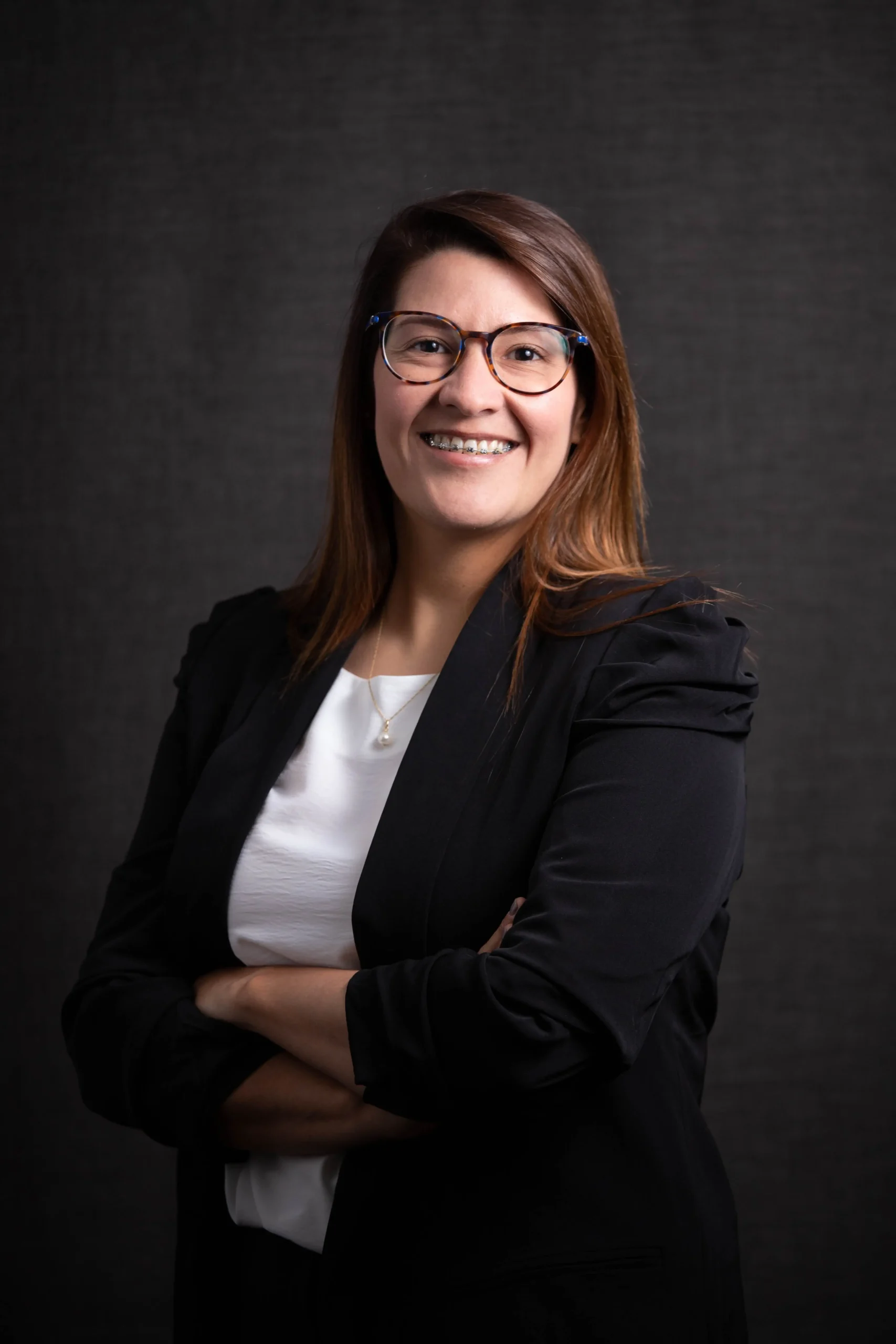
She is a partner attorney in the Corporate Law Department at VENFORT Abogados, with over a decade of uninterrupted practice in the Venezuelan market. She holds a law degree from the Universidad Santa María in Caracas, with specializations in Commercial Law from the same university and Business Law from the University of Alcalá (Madrid), as well as training in corporate legal management from IESA. Her practice combines firsthand knowledge of Venezuelan registries, notaries, and administrative agencies with the technical rigor expected of an international boutique firm: she advises large corporations and multinational groups entering the country, as well as small and medium-sized enterprises and family-owned startups establishing their first company in Venezuela, maintaining the same standard of rigor in every case, regardless of the scale of the project. She has led the advisory services for foreign companies that have signed high-value agreements in the oil and financial sectors.