
Dr. Alan Aldana
Founding Partner - Accredited Counsel before the International Criminal Court
Eduardo Mora Rodriguez
Partner Lawyer - Former Prosecutor - Specialist in International and Economic Criminal Law
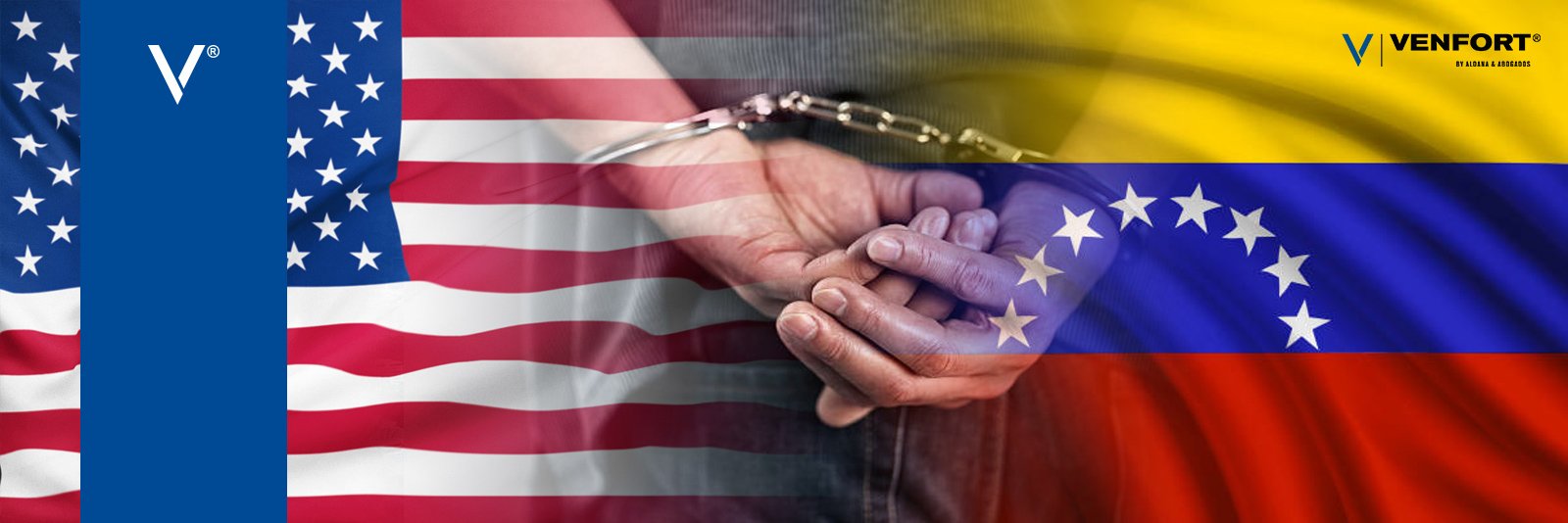
If you have ties between Venezuela and the United States, this article is relevant to you.
There is a treaty of extradition between Venezuela and the United States. It has been in force since 1923. It has never been denounced. And today, more than ever, it has real consequences.
If you are an entrepreneur in the energy sector, a banker, an executive of a transnational corporation, a former public official or a member of a family with significant wealth between the two countries, you need to understand three things: what the treaty says, how it may affect you, and what a team of specialized lawyers can do to protect you.
In our experience of more than twenty years defending high profile individuals in extradition proceedings, INTERPOL alerts and international criminal prosecutions, we have found one constant: those who act early retain their freedom, their assets and their reputation. Those who wait to be detained at an airport lose options.
What the treaty says and why it matters now
The Extradition Treaty between the United States of America and Venezuela was signed in Caracas on January 19, 1922 and entered into force on April 14, 1923 (43 Stat. 1698; Treaty Series 675). It is a bilateral agreement that obliges both countries to surrender persons accused or convicted of certain crimes, provided there is sufficient evidence.
Covered offenses include: bank and fiduciary fraud, embezzlement of public and private funds, falsification of official documents, obtaining securities by deception, perjury, breach of trust by corporate officers, manufacture of counterfeit currency, robbery with violence, kidnapping, homicide and attempted homicide, among others. It also covers participation as an accomplice in any of these crimes.
In practical terms: most of the conducts that are investigated today in the field of economic criminal law - money laundering, corporate corruption, financial fraud, corporate crime - can fall into one of the twenty-one categories of the treaty.
Key data: the treaty states that neither country is obliged to surrender its own citizens. But it does not prohibit it. And, above all, it does not prevent the extradition request from being executed through a third country -such as Spain, Colombia, Panama or the Dominican Republic- where the defendant resides or transits.
The fact that few people know: Article 69 of the Venezuelan Constitution
There is an enormous contradiction between the bilateral treaty and the Venezuelan constitutional law in force that every lawyer and every client should be aware of.
The article 69 of the Constitution of the Bolivarian Republic of Venezuela (1999) states categorically: «The Bolivarian Republic of Venezuela recognizes and guarantees the right to asylum and refuge. The extradition of Venezuelan men and women is prohibited».
This constitutional prohibition is absolute. It does not admit exceptions. It does not distinguish between common crimes and serious crimes. It cannot be repealed by a previous international treaty or by ordinary legislation, since the 1999 Constitution occupies the apex of the Venezuelan legal system in accordance with the principle of constitutional supremacy enshrined in its Article 7.
What does this mean in practice? That, according to Venezuelan domestic law, Venezuela cannot extradite any Venezuelan citizen to the United States or any other country, regardless of the provisions of the 1922 Treaty or any other international agreement. Article 69 operates as a constitutional shield for Venezuelan nationals within Venezuelan territory.
However - and here lies the real risk - this protection only works as long as the person remains in Venezuela. The moment a Venezuelan citizen leaves the country and finds himself in a jurisdiction where the United States has cooperation agreements in force -Spain, Colombia, Panama, Peru, Dominican Republic, among many others-, he is exposed to the activation of an extradition request, to an INTERPOL red alert or to a preventive detention in transit.
Strategic consequence: Article 69 protects Venezuelan nationals within Venezuela, but does not protect them abroad. This territorial gap is precisely the space where specialized international criminal defense operates. And it is where VENFORT Abogados deploys its capacity for coordinated action between Venezuelan courts, Spanish courts and our allied firms in the United States.
Risk profiles: who can be affected?
U.S. businessmen with operations in Venezuela. Executives of the oil, energy, financial or commodities sector who have operated with Venezuelan entities -including PDVSA or its subsidiaries- face a double risk: on the one hand, the possibility of being investigated by Venezuelan authorities for alleged economic crimes; on the other hand, the scrutiny of OFAC and the US Department of Justice for possible sanction violations. Both scenarios may result in extradition requests, international alerts or blocking of assets.
Bankers and financial managers with bilateral exposure. Persons involved in correspondent banking, management of accounts of politically exposed persons, international transfers or structuring of investment vehicles may find themselves on the radar of the authorities of one or both countries.
Former Venezuelan officials and their associates' assets. Former ministers, former governors, former directors of public entities, retired military personnel and their families, who reside abroad or travel frequently, are a recurring profile in extradition requests and INTERPOL red alerts. Article 69 protects them in Venezuela, but not in Madrid, Miami, Bogota or Panama.
Venezuelan businessmen in the United States or Europe. Industrialists, energy sector operators, government contractors and owners of large estates who emigrated and maintain assets with Venezuelan connections may be subject to judicial cooperation requests, bank information requests or asset forfeiture proceedings.
High net worth families with distributed assets. Estate structures, trusts, offshore companies and accounts in multiple jurisdictions require a comprehensive review of compliance and criminal exposure when there is a nexus with Venezuela.
Technical opposition strategies: the tools of defense counsel
Facing an extradition request is not an inevitability. International law, the 1922 treaty itself, the Venezuelan Constitution and Spanish law contain powerful legal tools that a specialized defense team can activate. These are the main lines of technical opposition that we deploy in our practice:
1. Challenge for insufficiency of evidence
The treaty requires sufficient evidence to justify detention under the law of the requested country. If the documentation is weak, incomplete or contradictory, the defense may obtain a denial of extradition. Assessing the strength of the evidentiary record is the first step in any serious defense strategy.
2. Exception for political offenses
The treaty prohibits extradition for crimes of a political nature. The Spanish Passive Extradition Law (Law 4/1985) also includes this exception. To prove it requires legal expertise, reports from international organizations and analysis of the political context of the requesting country. It is a particularly effective tool in the current Venezuelan context.
3. Safeguards against disproportionate sentences
The treaty allows extradition to be refused when the offense is punishable by death or life imprisonment, unless there are satisfactory assurances. The defense may demand specific diplomatic assurances and challenge the extradition if they are insufficient. In the Spanish system, the European Court of Human Rights has consolidated case law that reinforces this protection.
4. Lack of correspondence with the catalog of crimes
The treaty uses a closed list system. If the conduct charged does not fit into any of the twenty-one categories, the request must be rejected. This subsumption analysis requires a thorough knowledge of the treaty catalog and the criminalization of the requesting State.
5. Statute of limitations
If the crime is time-barred according to the legislation of the country where it was committed, extradition does not proceed. Verification of statutes of limitations and causes of interruption may be decisive.
6. Litigation and ongoing proceedings
If the requested person is being prosecuted in the requested State, extradition may be deferred. In the Spanish National Court, this provision allows to gain strategic time and to prepare a more robust defense.
7. Principle of specialty
The person surrendered can only be tried for the offense that motivated the extradition. Any broadening of charges constitutes a violation of this principle. The defense must monitor this aspect before, during and after the surrender.
8. Preventive action before INTERPOL
When there is a risk of a red alert being issued, the defense can file a confidential pre-emptive request with INTERPOL's Commission for the Control of INTERPOL's Files (CCF). At VENFORT Attorneys-at-Law, we have successfully cancelled red alerts in more than twenty cases.
9. Application for asylum and international protection
When the person is in Spain, the asylum application can suspend the extradition procedure while the Asylum and Refugee Office (OAR) assesses whether there is persecution in the requesting country. In certain cases, this route offers effective and lasting protection.
10. Referral to international human rights committees
In the most complex cases or when there are indications of political persecution, state reprisals or systemic violation of fundamental rights, our team has the capacity to take the case to international protection bodies: the United Nations Human Rights Committee, the UN Committee against Torture, the Inter-American Commission on Human Rights, the UN Special Rapporteurs and, at the European level, the European Court of Human Rights. These instances can issue precautionary measures, pronouncements on the situation of the requesting country and binding decisions that significantly reinforce the position of the defendant. VENFORT Abogados has experts in strategic litigation before these committees and courts, and has successfully brought complex cases before these bodies as part of a comprehensive defense strategy.
Where we advocate: Venezuela, and the United States
The defense in an extradition proceeding between Venezuela and the United States is not won in a single forum. It is won with a coordinated strategy in multiple jurisdictions, executed with precision and speed. At VENFORT Abogados we operate in the three scenarios that are decisive:
In Venezuela: defense before the Supreme Court of Justice
Under Venezuelan law, the extradition request is reviewed by the Supreme Court of Justice, which verifies compliance with legal requirements and the compatibility of the request with the constitutional order. Article 69 of the Constitution -which prohibits the extradition of Venezuelans- constitutes the first line of defense at the national level. Our team in Caracas acts with immediacy to activate all available constitutional and procedural guarantees, including constitutional protection actions and extraordinary remedies when the situation warrants it.
In the United States: coordination with trusted allied firms
VENFORT Abogados maintains exclusive ongoing working relationships with law firms in the United States with whom we have collaborated for many years in extradition, international sanctions and cross-border criminal defense cases. These firms, with a presence in New York, Miami, Washington D.C. and other key federal jurisdictions, are our permanent counterparts for the coordination of simultaneous defenses.
This relationship is not sporadic or circumstantial. It has been built over years of effective collaboration in real cases, which allows us to operate with a level of trust, fluidity and agility that can only be achieved with consolidated alliances. When a client of ours faces a procedure with a U.S. dimension, we do not look for a lawyer in the U.S.: we activate it, because it is already part of our work structure.
This tri-oceanic coordination capacity -Caracas, Madrid, United States- is what distinguishes VENFORT from any other Spanish-speaking law firm in this field. Serious international criminal defense does not allow for improvisation: it requires teams that already know each other, that have already worked together and that can react in hours, not weeks.
Active and passive extradition, depending on the country concerned:
The extradition process, when the requesting country is Venezuela, is governed mainly by the Extradition Treaty of 1922, in which Venezuela must request from the U.S. the surrender of a person who is allegedly in its territory.
Judicial Phase in Venezuela
Initial Request: The Control or Trial Judge, before whom the case is pending, requests the Criminal Cassation Chamber of the Supreme Court of Justice (TSJ) to initiate the extradition process.
Review by the TSJ: The Criminal Cassation Chamber verifies that the substantive requirements are met (crime typified in both countries and that it is not a political crime).
Ruling: If the TSJ considers the request to be admissible, it declares the extradition to be admissible and forwards the proceedings to the Executive Branch (Ministry of Foreign Affairs).
Diplomatic and Administrative Phase (Requesting country and country of destination) required)
Ministry of Foreign Affairs: It is in charge of formalizing the petition before the Government of the United States through diplomatic channels.
Translation and Documentation: The application must include certified copy of the arrest warrant or judgment, summary of the facts, filiation of the applicant and the applicable legal provisions, all duly translated into English.
Judicial Phase in the United States
Department of State: Reviews the application and, if it complies with the treaty, forwards it to the Department of Justice.
Hearing before a Federal Judge: A U.S. judge evaluates whether «probable cause» exists and whether the offense is covered by the 1922 treaty.
Final Decision: If the judge certifies extradition, the final surrender decision rests with the U.S. Secretary of State, who considers humanitarian or political factors before proceeding.
Why VENFORT Attorneys at Law
There are not many firms with real capacity to simultaneously defend before the Supreme Court of Justice of Venezuela, the Audiencia Nacional of Spain, the Commission for the Control of INTERPOL's Files, the International Criminal Court and the international human rights committees. VENFORT Abogados is one of them.
Our team is led by Dr. Alan Aldana, a lawyer with more than twenty years of experience, accredited before the International Criminal Court, certified in OFAC sanctions by Florida International University, and trained in negotiation and leadership by Harvard and Yale Universities. Together with him, Eduardo Mora Rodríguez, partner lawyer, former prosecutor of the Venezuelan Public Prosecutor's Office and specialist in international criminal and economic law, provides a deep knowledge of the Venezuelan judicial system from the perspective of the prosecution and the defense.
We coordinate a team that includes former judges, former prosecutors, former presidents of private banks, experts in litigation before international human rights committees and top-level consultants, with a network of consolidated alliances in the United Kingdom, Portugal, Andorra, France, Belgium, Singapore, Dubai, Colombia, the United States, the Dominican Republic, Panama and other countries.
Our clients include executives of financial institutions, transnational corporations, embassies, senior public officials and high net worth families. We have participated in high-profile cases such as the Panama Papers, the 2009 financial crisis and the Odebrecht case in 2023.
We operate with a simple rule: the best international criminal defense does not begin in the courtroom, but months or years in advance, with a preventive strategy tailored to each client. If you sense you may be at risk, the time to consult is now.
Entrust your case to specialists
At VENFORT Abogados we understand what is at stake. We know that behind every case there is a person, a family, a patrimony built over decades and a reputation that cannot be damaged. Our commitment is to offer an international criminal defense of the highest level, with absolute confidentiality, technical rigor and immediate reaction capacity.
If you, your family or your company has exposure to the Venezuela-US axis, please contact us. We will evaluate your situation with full confidentiality and propose a legal strategy tailored to your case.
VENFORT Lawyers
International criminal defense - Extraditions - INTERPOL - Sanctions - International Criminal Court - Human Rights
Madrid: Paseo de la Castellana 93, 2nd floor, office 242, 28046
Caracas: Luis Roche de Altamira Ave., Helena building, office 16, 1060
www.venfort.com
Spain: +34 614 335 889 - Venezuela: +58 212 283 9390
Founding partner of VENFORT Abogados. Accredited lawyer before the International Criminal Court. Certificate in OFAC sanctions (FIU, USA). Master in Criminal Procedural Law (ICAM). Expert in Economic Criminal Law (UCM). Programs at Harvard (Negotiation and Leadership) and Yale (Management for Lawyers). Director of the Venezuelan committee of the World Compliance Association.
Partner of VENFORT Abogados. Former prosecutor of the Public Prosecutor's Office of Venezuela. Career official in the Criminal Judicial Circuit of Caracas (2001-2012). Specialist in International Criminal Law (ULAC). Doctorate in Criminal Law (Universidad Santa María). Expert in prosecutorial function (National School of Prosecutors).
Principles of the firm: VENFORT Abogados does not accept the representation of cases related to terrorism, drug trafficking or sexual crimes. These ethical limits are foundational and unwavering principles of our professional practice.



 Español
 English
 Français
 简体中文
简体中文 Русский
 العربية
 हिन्दी