
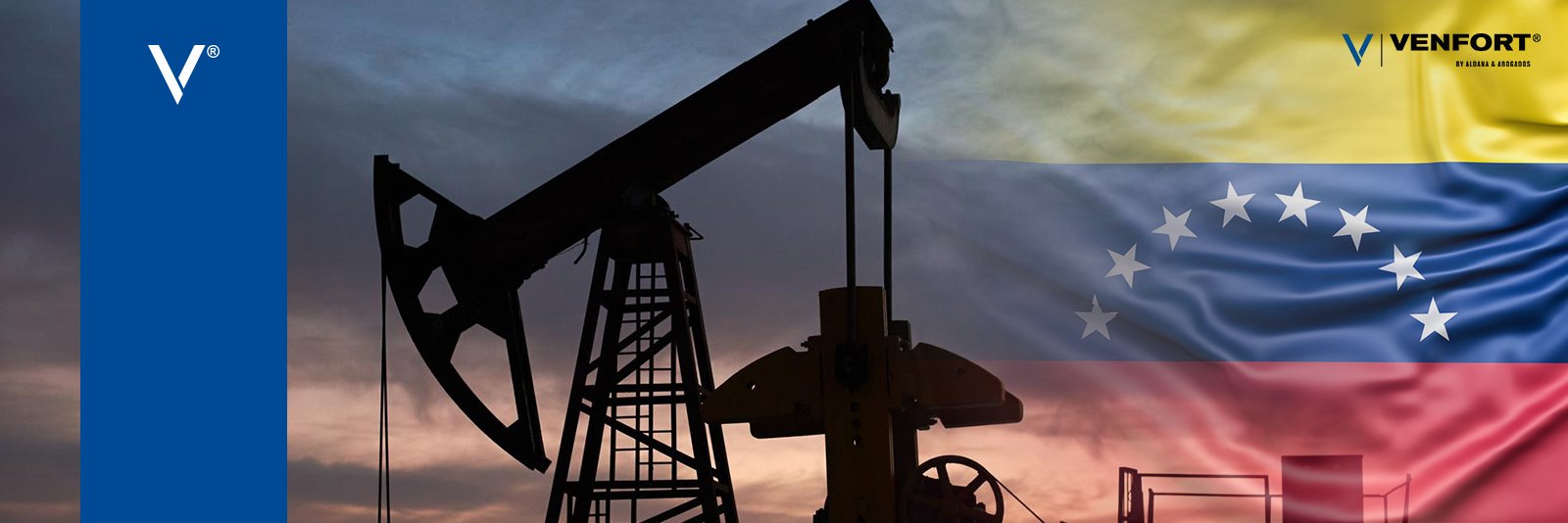
For years, investing in the Venezuelan energy sector has been synonymous with extreme risk. Legal uncertainty, regulatory rigidity, international sanctions and administrative discretionality have turned the country - paradoxically one of the richest in energy resources in the world - into an environment that is practically off-limits to sophisticated capital.
This scenario is changing. Not because of political statements, but because of specific normative facts and verifiable regulatory decisions.
The Partial Reform of the Organic Hydrocarbons Law, approved in January 2026, together with the OFAC General License 46 The new legal framework applicable to the Venezuelan oil business has been redefined by the United States. However, this new context cannot be interpreted as an unrestricted openness, but rather as a model of conditional opening, The company's profitability is only possible if the investment is structured with legal rigor and reinforced regulatory compliance.
The reform of the Hydrocarbons Law: what it really changes
The reform does not completely replace the 2006 law, but it does substantially modifies its operating logic. The objective is clear: to make the oil industry “investable” without formally abandoning the constitutional principles of sovereignty and state reserve.
Among the most relevant changes are the following:
- Expansion of private participation, allowing private domiciled companies to operate primary activities through contracts with state-owned entities or their subsidiaries.
- Formalization of integrated management contracts at the operator's risk and cost., The investment, operation and financial risk are transferred to the private sector.
- Greater fiscal flexibility, with royalties and taxes adjustable per project.
- Recognition of Alternative Dispute Resolution mechanisms, including arbitration, under certain parameters.
From the investor's perspective, the framework is more attractive than the previous rigid scheme. However, legal certainty does not emanate automatically from the legal textdepends on the quality of the contractual design, the constitutional fit and the anticipation of adverse scenarios.
Legal certainty: less legal rigidity, more contractual engineering
The reform introduces key concepts such as the economic-financial equilibrium of the contract, The project's economics can be adjusted when legal or regulatory changes substantially affect the economics of the project. In theory, this is a stabilization clause typical of energy and infrastructure law.
In practice, its effectiveness will depend on:
- How “substantial impairment” is contractually defined.
- What procedure is established to activate the rebalancing.
- Whether the mechanism is enforceable and bankable against third parties.
In the current Venezuelan context, legal certainty is a key factor in the does not reside in the law alone, The main focus is on the ability to structure robust, bankable contracts that are compatible with the constitutional framework.
The second perimeter: international sanctions and external control
No serious analysis of the Venezuelan energy sector is complete without addressing the international sanctions regime., It is this -and not political discourse or internal regulatory reform- that ultimately defines the real limits of investment, the bankability of projects and the viability of any operation linked to the Venezuelan oil market in the global financial and commercial environment.
In this context, the General License 46, issued by OFAC on January 29, 2026, is a relevant turning point.
What the General License 46 allows
The license authorizes, under strict conditions, operations related to oil of Venezuelan origin along the entire value chain, including:
- Lifting, transport and export.
- Marketing and supply.
- Logistics, port and marine insurance services.
- Refining and related operations.
All this, even when Venezuelan state-owned entities, including PDVSA, are involved.
What controls and limits
The license is not full standardization. It imposes a extraterritorial legal perimeter, The requirements of which include the following:
- They can only operate U.S. entities “established” before January 29, 2025.
- Contracts must be subject to U.S. law and jurisdiction.
- Payments to blocked parties should be channeled to special funds in the custody of the U.S. Treasury.
- Structures involving Russia, Iran, North Korea, Cuba and, in certain cases, China are excluded.
- A strict regime of periodic reports to U.S. authorities.
In practical terms, the United States allows operations, but under their own legal, financial and supervisory framework.
The real challenge: reconciling Venezuelan law and sanctions
Herein lies the core of the risk - and the opportunity - for the sophisticated investor.
A project can be fully compatible with the Reform of the Organic Hydrocarbons Law, but unfeasible from the point of view of General License 46. Or, conversely, structurable under OFAC, but legally vulnerable in Venezuela.
Real legal certainty only exists when:
- The investment vehicle is correctly domiciled.
- The contract respects Venezuelan constitutional limits.
- The financial structure complies with OFAC and other sanctioning regimes.
- The chain of partners and beneficiaries undergoes enhanced due diligence.
- The contractual design provides for scenarios of regulatory change, asset reversion and orderly exits.
Venezuela today: real opportunity, but not indulgence
The oil reform and the relaxation of sanctions do not eliminate the risk, but rather transform it. It goes from an absolute political risk to a political risk. highly sophisticated legal, technical and compliance.
For energy companies, traders, investment funds and family offices, Venezuela is back on the radar. But only for those who understand that:
- The timing is strategy.
- Compliance is part of the business.
- Law is the main instrument for the protection of capital.
VENFORT ABOGADOS: strategic advice on energy and penalties.
At VENFORT LAWYERS we advise investors, operators and business groups in:
- Legal structuring of energy projects in Venezuela.
- Contractual design according to the Hydrocarbons Law Reform.
- Compliance with international sanctions (OFAC, EU and United Kingdom).
- Prevention of criminal, regulatory and reputational risks.
- Entry, operation and exit strategies in sanctioned environments.
Investing in Venezuela is possible. Getting it right is a legal decision. Contact us.



 Español
 English
 Français
 简体中文
简体中文 Русский
 العربية
 हिन्दी