


How large corporations can protect their operations, reputation, and executives from the new generation of geopolitical, regulatory, and criminal threats.
Dr. Alan Aldana | Managing Partner, VENFORT®
Prof. Ludovic Hennebel | Of Counsel
Madrid · Caracas · Brussels · Geneva
2026
The front line is no longer the battlefield. It's the boardroom.
The business world has entered a new phase. Geopolitical volatility, international sanctions regimes, activist litigation, and coordinated smear campaigns have fundamentally transformed the risk landscape for multinational corporations.
Today, the gravest threat to a company is not solely commercial. It is legal, reputational, and increasingly, personal.
A contract awarded in Tel Aviv may be challenged in a European court. A concession in Caracas may trigger exposure to sanctions in Washington. A logistics operation in Kyiv may be subject to simultaneous scrutiny from multiple jurisdictions, regulators, and media platforms.
And most importantly: the exposure is no longer limited to society. It reaches its counselors, its executives, and those who make decisions.
Those who understand this reality do not react to crises. They build the necessary legal architecture to withstand them before they occur.
Lawfare: The Strategic Use of Law as a Weapon Against Business
The concept of lawfare —the calculated use of judicial procedures, regulatory frameworks, and institutional mechanisms to harm a business rival, destabilize an investment, or force a political outcome— is no longer a theoretical notion. It is an operating instrument that already affects businesses across all sectors.
This phenomenon is especially visible in four scenarios: conflict zones and disputed territories, such as Israel, Gaza, or Ukraine; jurisdictions subject to sanctions from the OFAC, The European Union or the United Kingdom; countries in political or institutional transition, such as Venezuela, Ecuador, or Mexico; and highly competitive sectors where litigation is used as a weapon to displace a contract winner.
A corporation with operations in Israel may face coordinated campaigns to exclude it from European public procurement. A company with exposure in Venezuela may find its executives becoming targets through sanctions narratives or INTERPOL alerts. An investor involved in the reconstruction of Ukraine may encounter compliance demands that extend far beyond their contractual obligations.
This is not a hypothetical risk. It is the current operational reality.
A Real Case: When Lack of Foresight Costs Billions
In 2025, a European industrial company with over a hundred years of history and a turnover exceeding 2.9 billion euros was selected as the preferred bidder for a public contract valued at 1.7 billion euros in another European Union country.
Within weeks, two of the sector's largest competitors filed administrative appeals with the competent court. Simultaneously, coalitions of non-governmental organizations published coordinated reports alleging the company's complicity in violations of international humanitarian law, linked to its operations in a disputed territory. The United Nations Special Rapporteur issued a report expressly mentioning the company. Parliamentary questions were raised. Institutional investors began receiving letters from activist organizations demanding divestment. The stock price fluctuated. The contract was suspended.
The company had not committed any illegality.
Independent human rights due diligence reports, prepared by highly reputable experts, concluded that the company's operations complied with international standards, that its infrastructure provided an essential public service without discrimination, and that there was no causal link between its activities and the alleged violations. The OECD National Contact Point had already validated its due diligence system years earlier.
However, the company did not have a preventive opinion from international criminal law that would preemptively dismiss any hypothesis of complicity. Nor did it have a strategic response protocol for coordinated campaigns, nor specialized advisors positioned in advance in the jurisdictions where the attacks materialized.
The outcome was predictable: a crisis that could have been avoided with the right legal framework ended up paralyzing a 1.7 billion euro contract, damaging the company's reputation, and personally exposing its directors.
This case is not exceptional. It is representative of what happens when large corporations face geopolitical exposure without prior advice. And it is exactly the kind of situation that VENFORT was created for.
What VENFORT offers: an unparalleled dual-capacity model
VENFORT was conceived for this environment. The firm combines two disciplines that rarely operate together, but which are essential when exposure materializes simultaneously in multiple jurisdictions: international criminal defense and strategic navigation of international human rights law.
Dr. Alan Aldana
International criminal defense and strategic protection
Dr. Aldana is a lawyer accredited with the International Criminal Court with over twenty years of experience in international criminal law, extradition proceedings, INTERPOL litigation, and cross-border economic defense.
Its practice spans Europe, Latin America, the United States, and the Middle East.. Advises corporations, financial institutions, senior management, and high-net-worth families facing complex international exposure situations.
Your experience includes defense in high-profile international investigations. —as in the cases derived from the Panama Papers, the 2009 financial crisis and the Odebrecht investigation—extradition proceedings affecting senior executives, challenges to INTERPOL red notices, and strategic advice in politically sensitive jurisdictions.
His/Her career in Venezuela —a jurisdiction where legal and political dynamics permanently intersect, where the rule of law has been systematically eroded, and where protecting a client demands intelligence, discretion, and an intimate knowledge of institutional dynamics—has forged a unique capacity: to defend when legal certainty is limited and risk is systemic.
Your work in the context of Colombia's peace process, advising entrepreneurs and private sector leaders on the protection of their rights, assets, and personal security during and after the transition, has given him an unparalleled perspective on how corporations and their executives should position themselves in jurisdictions where the legal and political order is in flux.
As director of the Venezuelan Committee of the World Compliance Association y vocal of the Aldana Foundation, dedicated to representing victims of grave human rights violations, Dr. Aldana combines the rigor of criminal defense with a deep commitment to international law.
Prof. Ludovic Hennebel
International Law, Human Rights, and Institutional Strategy
Professor Hennebel is one of Europe's most authoritative voices. in international human rights law and its relationship with corporate responsibility.
As a member of the United Nations Committee on Economic, Social and Cultural Rights —the organ responsible for overseeing States' compliance with the International Covenant on Economic, Social and Cultural Rights— and counsel At Doughty Street Chambers in London, it operates at the intersection of international institutions, regulatory frameworks, and corporate accountability mechanisms.
Your work with corporations includes the strategic navigation of United Nations mechanisms, engagement with OECD National Contact Points, interpretation of developments in international law applicable to the private sector, and alignment with emerging due diligence frameworks, including the European directive currently being implemented.
Their strength lies in understanding not only what the law requires, but rather how institutions interpret, apply, and implement it. This insider view from within the United Nations system is what allows VENFORT to anticipate, rather than merely react.
VENFORT difference
VENFORT does not offer reactive defense. It designs preventive legal protection structures.
Its strength lies in the integration of four capabilities rarely found under one roof: international criminal defense, sanctions strategy and regulatory compliance, institutional engagement, and multi-jurisdictional risk coordination.
When a corporation receives communication from a United Nations Special Rapporteur, it needs someone who understands how those reports are drafted and what weight they carry. When that same corporation faces the risk of its executives being named in a criminal complaint in a European jurisdiction, it needs someone who has defended clients in proceedings exactly like those. When both threats materialize simultaneously —as increasingly happens—, VENFORT provides a unique, coordinated response on all fronts.
What we have achieved
The confidentiality we owe our clients prevents us from disclosing names and details. But the results speak for themselves.
- Preventive opinions on international criminal law that have been used as primary defense against exclusion procedures in European public tenders, thereby prematurely discarding any hypothesis of complicity in international crimes.
- Challenges to INTERPOL Red Notices in proceedings before the File Control Commission, achieving the withdrawal of alerts that had been instrumentalized for political or commercial purposes.
- Human rights due diligence frameworks designed and validated by independent experts, which have passed the examination of the OECD National Contact Points and are used as a legal and reputational shield against exclusion campaigns.
- Defense strategies in extradition proceedings before the Spanish National Court and courts of multiple jurisdictions, protecting senior executives against politically motivated requests.
- Strategic consulting for business owners and high-net-worth families in contexts of political transition, including Venezuela and Colombia, guaranteeing the protection of their rights, assets, and personal integrity.
- Coordination of Multijurisdictional Teams in matters spanning Spain, Switzerland, the United Arab Emirates, the United States, and offshore jurisdictions, with asset recovery, letters rogatory, and financial forensic tracing.
Risks that already affect large corporations
- Exclusion from international public procurement due to alleged human rights violations or for being linked to sanctioned territories.
- Personal Exposure of Counselors and Managers under doctrines of universal jurisdiction, frameworks of international criminal law, or national complicity legislation.
- INTERPOL Red Notices used as a political or commercial lever, which require a specialized challenge before the File Control Commission.
- Risk of sanctions under OFAC, European Union, and United Kingdom regimes, including exposure to secondary sanctions for entities with operations or financial flows in designated jurisdictions.
- Coordinated reputational attacks through non-governmental organizations and media outlets, designed to force divestiture or create conditions for hostile regulatory action.
- Strategies for lawfare deployed by competitors in stable jurisdictions, through administrative challenges, regulatory complaints, or alliances with activist organizations.
Who do we advise
VENFORT works with boards of directors, legal directors, heads of institutional relations and public policy, investment funds, sovereign entities, family offices and multinational corporations operating in high-risk jurisdictions.
Our geographic reach reflects the jurisdictions where the most complex issues arise: Spain, Venezuela, Colombia, Mexico, Panama, United Arab Emirates, Israel, Belgium, France, Switzerland, United Kingdom, United States, Singapore, and the entirety of the Latin American and Middle Eastern regions.
Final reflection
International law is evolving faster than corporate governance structures can assimilate. United Nations reports are used as evidence in commercial litigation. Sanctions frameworks are reconfiguring financial systems. Reputational narratives are conditioning regulatory decisions.
The question is no longer whether your organization will face an exposure of this nature.
The question is whether it will be ready when that happens.
VENFORT exists so that the answer is yes.
Confidential consultation
If you wish to discreetly assess your organization's geopolitical, regulatory, or criminal exposure, Dr. Alan Aldana and Professor Ludovic Hennebel are available for an initial, no-obligation, confidential consultation.
Can be addressed directly to:
- Dr. Alan Aldana — contacto@venfort.com
- Prof. Ludovic Hennebel
Or request a call back via www.venfort.com/contact.
All communications are protected by attorney-client privilege.
This article is published for informational purposes only and does not constitute legal advice. All matters discussed herein are subject to applicable ethical rules and professional confidentiality obligations. References to real-life scenarios are based on publicly accessible sources and do not disclose information protected by professional secrecy.
© 2026 VENFORT®. All rights reserved.
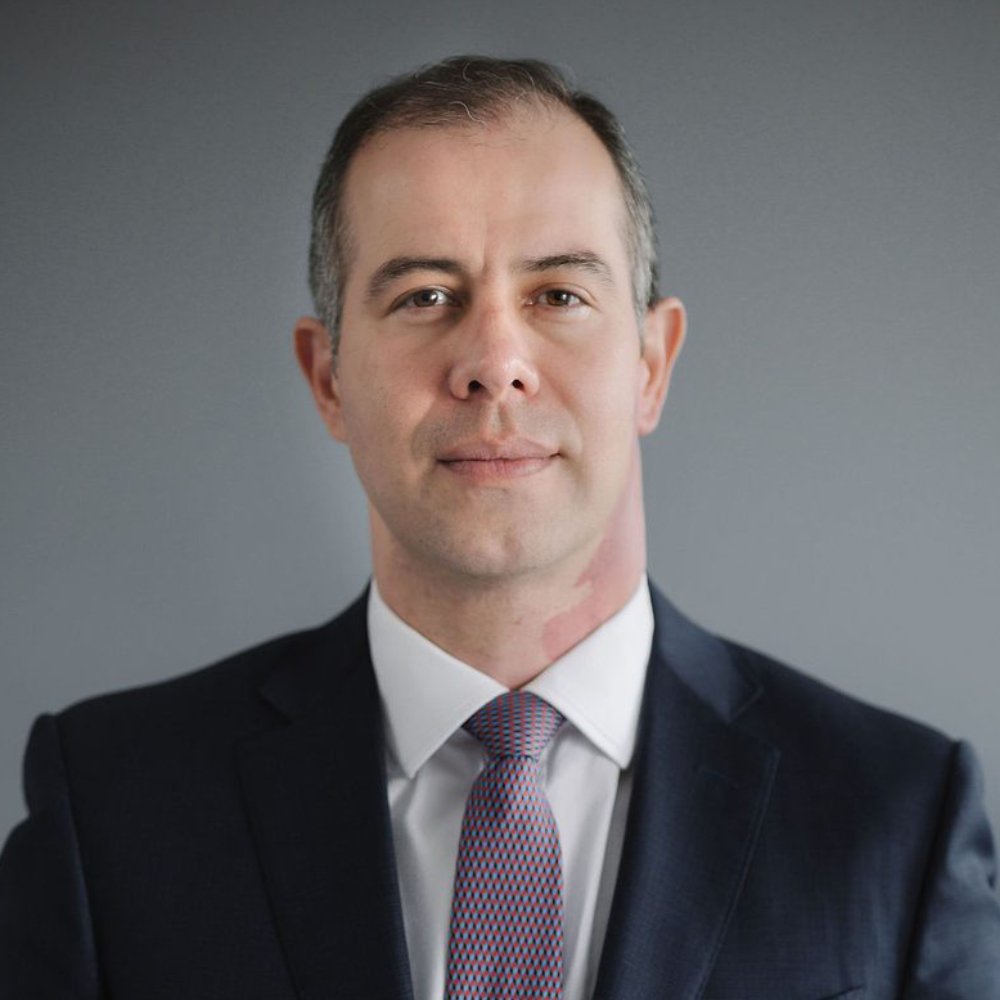
Founding partner and Director of the International Criminal Law Department at VENFORT Lawyers. Lawyer accredited before the International Criminal Court, with over twenty years of practice in extraditions, INTERPOL proceedings, economic criminal law, and international sanctions, assists entrepreneurs, executives, institutions, and families with interests in Europe and the Americas.