By Bianca Marán · Partner of the Corporate Law Department at VENFORT Abogados.
Establishing a company in Venezuela as a foreign investor is legally possible, but it requires more than just registering a company. Before starting operations, it is advisable to define the corporate structure, review the rules for foreign investment, properly prepare the documentation, and determine the tax, labor, regulatory, and, when applicable, international sanctions obligations.
During 2026, interest in new operations and investments linked to Venezuela has intensified. At the same time, certain international rules—especially the sanctions regime administered by the United States—have undergone significant and frequent modifications.
For an investor, the central question is not simply whether they can form a company, but How it should be structured so that it can operate, hire staff, open banking relationships, fulfill its obligations, and protect the investment..
Quick answer: what you need to know before forming a company in Venezuela
- A foreigner can form or participate in Venezuelan companies, Without prejudice to the restrictions that may exist in regulated or strategic sectors.
- The Anónima Company is one of the most commonly used corporate structures, But it is not necessarily the right one for all projects.
- Registration in the Commercial Registry is only the beginning. After that, tax, municipal, labor, and sectoral obligations must be met.
- The Tax Information Register, known as RIF, identifies the company fiscally. before the Venezuelan Tax Administration.
- Foreign investment and the formation of a company are not exactly the same process. Depending on the operation, there may be additional records or requirements.
- The international sanctions regime must be reviewed before the operation is carried out., Especially when people, banks, companies or capital linked to the United States are involved.
- Administrative deadlines should not be treated as guarantees. They vary depending on the Mercantile Registry, the competent body, the documentation and the sector of activity.
Can a foreigner form a company in Venezuela?
Yes.
Venezuelan legislation allows the participation of foreign investors in economic activities, subject to the general rules and the limitations that may exist in sectors subject to special regulation.
The Venezuelan Constitution establishes that foreign investment is subject, as a general principle, to the same conditions as domestic investment. However, certain activities — including some related to hydrocarbons, mining, banking, telecommunications, or other strategic sectors — may be subject to special legislation and authorizations.
Therefore, before the company is established, it must be identified with precision. what activity the company will develop and what legal regime it will be subject to.
What corporate structure is best for investing in Venezuela
The choice depends on the type of project, the shareholders, financing, corporate governance, and the eventual entry of new investors.
Anonyma Company
The Anonyma Company, commonly identified by the acronym C.A., is one of the most commonly used corporate forms in Venezuela.
It allows the separation of the company's assets from the personal assets of its shareholders and offers flexibility to organize capital, management, and the incorporation of new partners.
It is common in business projects that require a recognizable corporate structure for banks, suppliers, customers, and investors.
Limited Liability Company
The Limited Liability Company, A S.R.L., or limited liability company, may be useful in certain closed businesses or with a limited number of partners.
Its convenience must be studied on a case-by-case basis, especially with regard to the rules applicable to participation quotas, their transmission, and the internal organization of the company.
Branch of a foreign company
A company incorporated outside of Venezuela can also consider establishing a branch.
This alternative maintains a direct legal relationship with the foreign company and, precisely for this reason, it must be analyzed with special care from the perspective of liability, taxation, foreign documentation, and the parent company's reporting.
Joint venture or joint enterprise
In projects of greater complexity, it may be advisable to create a joint venture with a Venezuelan partner or with another international investor.
In these cases it is especially important to regulate:
- contributions from each partner;
- corporate government;
- voting rights;
- distribution of profits;
- financing;
- restrictions on the transfer of shares;
- exit mechanisms; and
- solution of disputes.
The choice of the structure must be made formerly Register the company now, not later.
How to form a company in Venezuela step by step
Although the specific requirements may vary depending on the jurisdiction and the activity, the corporate process usually includes several stages.
1. Defining shareholders, activity and structure
Before preparing the statutes, it is advisable to determine:
- who will be the shareholders;
- what percentage will each of them have;
- what will be the economic activity;
- how the company will be financed;
- who will administer the company; and
- what rules should apply to the entry or exit of partners.
2. Select the social designation
The availability of the name must be verified with the corresponding Mercantile Registry.
The denomination must be consistent with the activity and avoid conflicts with already registered names.
3. Prepare the constituent document and the statutes
The document must regulate, among other matters:
- identification of the partners;
- social purpose;
- capital;
- shares or participations;
- administration;
- powers of representatives;
- assemblies;
- closing of the financial year; and
- relevant internal rules.
The social purpose of the organization deserves special attention. A text that is too generic or poorly designed can create subsequent difficulties with banks, municipal authorities, or sectoral regulators.
4. Registering the company in the Commercial Registry
Registration gives the company legal existence in accordance with the Venezuelan commercial system.
When documents issued abroad are involved, it is necessary to check beforehand whether they require an apostille, legalization, and translation by a public interpreter.
5. Obtain the Tax Information Register
Once the company is established, the procedures must be completed. Fiscal Information Register (RIF) before the National Integrated Customs and Tax Administration Service, known as SENIAT.
The RIF is essential for tax relations and for multiple commercial and administrative procedures.
6. Completing the subsequent obligations
Depending on the project, the following may be necessary:
- tax registrations;
- labor records;
- municipal license for economic activities;
- health permits;
- sectoral authorizations;
- importation or export records; and
- other specific permits.
Therefore, “incorporated company” and “ready to operate company” do not always mean the same thing.
What documents must a foreign investor prepare
The exact documentation depends on whether the shareholder is a natural person or a foreign company.
It is usually advisable to prepare in advance:
- passport or identity document;
- constituent documents of the foreign company, if a legal entity is involved;
- corporate agreements that authorize the investment;
- powers of representation;
- identification of final beneficiaries when required;
- information about the administrators;
- address of the new company;
- capital structure; and
- precise description of the economic activity.
Documents issued outside of Venezuela may require apostille or legalization, and when they are written in another language, translation into Spanish.
What obligations exist after the Commercial Registry
One of the most common mistakes is to assume that the work ends when the company is registered.
In reality, from that moment on a second phase of compliance begins.
Tax obligations
The company must organize its tax compliance with the National Integrated Customs and Tax Administration Service and review, according to its activity, obligations related to the Income Tax, the Value-Added Tax, and other applicable taxes.
Employment and social security obligations
When a company hires workers, it must review the corresponding obligations in terms of labor and social security.
This may include records and contributions to agencies such as the Venezuelan Institute of Social Security and other entities provided for by applicable legislation.
Municipal obligations
The company must study the taxes and licenses of the municipality where it will carry out its activity.
The commercial registration does not replace a municipal license for economic activities when it is required.
Sectoral permits
Regulated activities may require additional permits.
An enterprise engaged in food, health, hydrocarbons, mining, telecommunications, finance, insurance, transportation or other activities subject to special regulation should not start operations based solely on its business registration.
Foreign investment and company formation: why they are not the same process
Forming a Venezuelan company and registering or structuring a foreign investment are related issues, but are legally distinct.
Society is the vehicle through which economic activity can develop.
Foreign investment, on the other hand, requires studying the origin, form, amount and destination of the capital, as well as the rules that regulate its recognition and the competent authorities according to the sector.
Therefore, a foreign investor must analyze both issues together from the very beginning.
What a US company should check before investing in Venezuela
Companies and individuals subject to the jurisdiction of the United States must perform a specific analysis of the regime administered by the Office of Foreign Assets Control (OFAC), That is, the Office of Foreign Assets Control of the U.S. Treasury Department.
During 2026, OFAC issued and modified various general licenses related to Venezuela, including authorizations related to oil, gas, minerals, financial services, telecommunications, and certain investment negotiations.
This framework has changed several times during the year. Even the September 28, 2026, OFAC has again modified general licenses related to Venezuela.
For that reason, it is not legally prudent to claim that “the sanctions have been lifted” or that any investment is authorized.
Before signing, transferring funds, or executing an operation, they must be reviewed:
- the parties involved;
- the final beneficiaries;
- the intervening banks;
- the economic sector;
- the general license that may apply;
- its conditions and exclusions; and
- any specific authorization that may be necessary.
The analysis by VENFORT on the matter can also be consulted. Legal framework for investing in Venezuela in 2026.
How long does it take to form a company in Venezuela
There is no single timeframe that can be guaranteed for all cases.
Time depends, among other factors, on:
- the competent Commercial Registry;
- the availability of the denomination;
- the complexity of the statutes;
- if there are foreign shareholders;
- the need for apostills or translations;
- the economic sector;
- the subsequent permits; and
- the response of each administrative body.
Serious planning must distinguish between three moments:
- document preparation;
- constitution and registration of the company; and
- later operational authorization.
Offering the investor a phased timeline is more precise than promising a fixed date.
Common mistakes when starting a business in Venezuela
Among the mistakes that should be avoided are:
- using standard statutes without adapting them to the project;
- drafting an overly broad or inaccurate social object;
- constitute first and then analyze the sectoral regulation;
- do not review the foreign documentation before submitting it;
- confusing corporate constitution with registration of foreign investment;
- delaying tax, labor or municipal obligations;
- opening trade relations without a proper review of end beneficiaries;
- assumed that international sanctions are no longer relevant; and
- using a corporate structure that does not correspond to the way the project will actually be financed and managed.
What an investor should check before entering the Venezuelan market
A well-structured operation should answer at least these questions:
- Who will own the investment?
- Which corporate vehicle is suitable?
- What permits are required for the activity?
- How will the capital be provided?
- How will dividends be distributed?
- What taxes affect the operation?
- What labor obligations will exist?
- What municipal rules apply?
- Is there exposure to international sanctions?
- Which bank will process the payments?
- How will disputes between partners be resolved?
- What will happen if one of the investors decides to leave?
Answering these questions before investing reduces the risk of having to reconstruct the operation legally when the company is already operating.
Frequently asked questions about forming a company in Venezuela
Do I need to travel to Venezuela to form a company?
Not necessarily. Depending on the structure and the available documentation, many procedures can be organized through powers of attorney and documents issued abroad. It is necessary to check which documents require apostille, legalization, or translation.
Can a foreigner be a shareholder in a Venezuelan company?
Yes, as a general rule. However, certain sectors are subject to special legislation and must be reviewed before defining foreign participation.
What does RIF mean?
RIF stands for Fiscal Information Registration. It is the tax identification of the person or company before the Venezuelan Tax Administration.
What type of society is more suitable?
It depends on the activity, the number of partners, funding, corporate governance, the possible entry of new investors, and the exposure of the parent company. The Public Company is common, but it should not be chosen automatically.
Does registering the company mean that it can already operate?
Not always. After the constitution, there may be tax, labor, municipal, and sectoral obligations that must be completed before starting certain activities.
Do U.S. sanctions prevent investment in Venezuela?
No general answer can be given. The regime has evolved significantly over 2026 and there are different general licenses, but each transaction must be analyzed according to the parties, the sector, the banks and the applicable authorization.
Plan first, then build
The main value of good corporate advisory services lies not in submitting documents to a Commercial Registry, but in correctly defining the structure before doing so.
A company may be formally established and still have problems operating if its tax regime, permits, the relationship between partners, the source of capital, compliance rules, or international restrictions are not foreseen.
Companies, family groups and investors who are considering starting or resuming operations in Venezuela should review the corporate, fiscal, regulatory and compliance structure of the investment beforehand.
VENFORT Abogados advises on the structuring and legal execution of investments and business operations in Venezuela, including corporate formation, foreign investment, contracting, due diligence, and corporate compliance.
About the author
Bianca Marán She is a partner at VENFORT Abogados and develops her practice in the areas of corporate law, corporate law, commercial law, corporate compliance and negotiation.
She is a lawyer for the University of Santa María, Specialist in Commercial Law by that university and specialist in Right of Enterprises by the Alcalá University, In Spain. It also has training in corporate legal management. Institute of Higher Studies in Administration (IESA), business management for lawyers at the Andrés Bello Catholic University and LegalTech in the University of Austral.
His practice focuses on the legal structuring and accompaniment of companies that operate or are considering operating in Venezuela, with special attention to corporate organization, contracting, investment, compliance, and corporate legal management.
The firm's professional team can be consulted at VENFORT Lawyers.
Legal notice: this article is for informational purposes only and does not constitute legal advice. Each investment must be analyzed individually based on the activity, corporate structure, source of capital, sectoral regulations, taxation, and international sanctions regime that may apply.
Sources and reference links
- VENFORT Abogados — Investing in Venezuela in 2026: a legal guide for investors
- VENFORT Abogados — Publications
- Office of Foreign Assets Control — Sanctions related to Venezuela
- Office of Foreign Assets Control — modifications to general licenses related to Venezuela, September 28, 2026
- Venezuelan Consulate in Madrid — procedures for foreigners
- Ministry of People's Power for Foreign Relations and International Trade — Tourist Visa for Investors
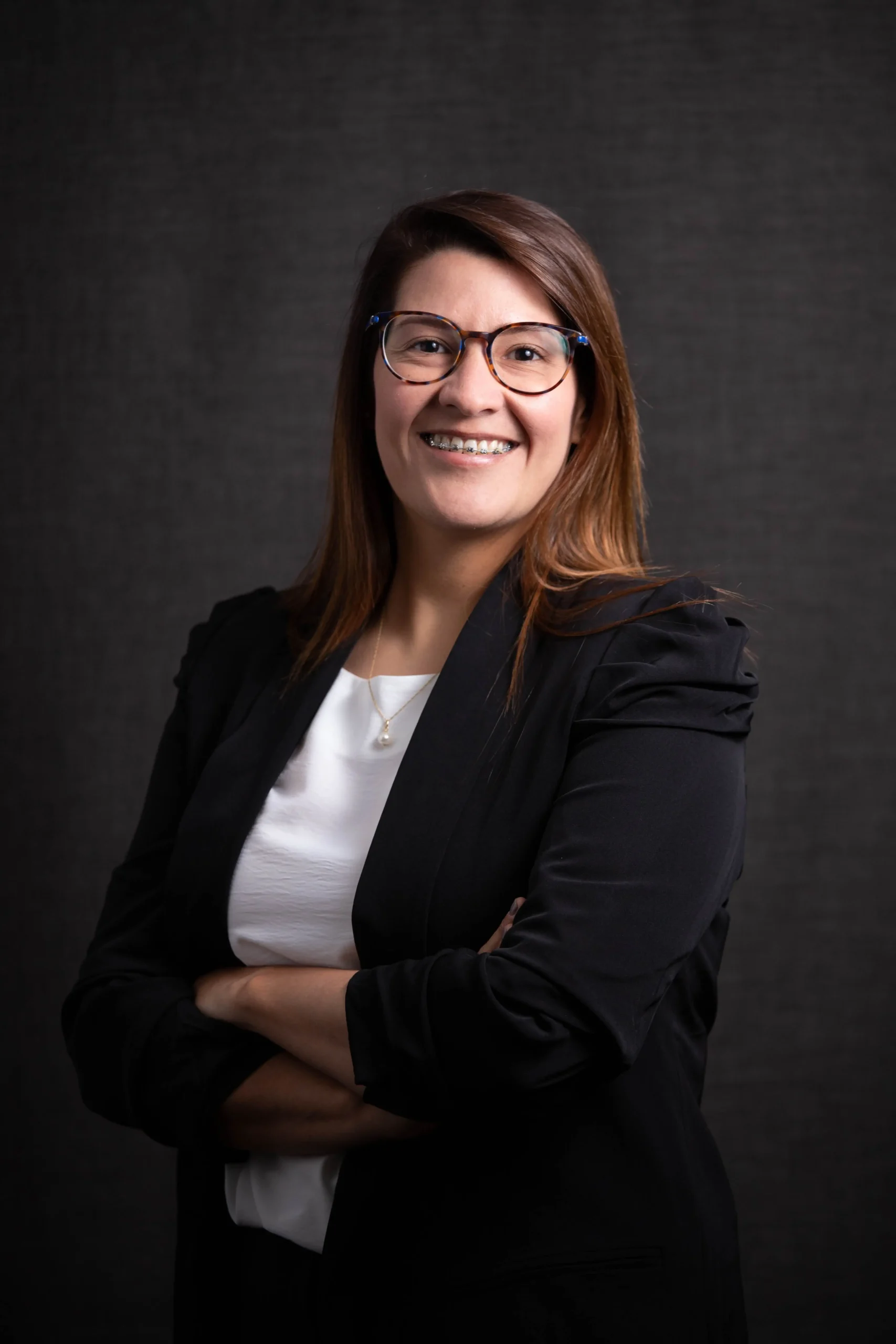
She is a partner attorney in the Corporate Law Department at VENFORT Abogados, with over a decade of uninterrupted practice in the Venezuelan market. She holds a law degree from the Universidad Santa María in Caracas, with specializations in Commercial Law from the same university and Business Law from the University of Alcalá (Madrid), as well as training in corporate legal management from IESA. Her practice combines firsthand knowledge of Venezuelan registries, notaries, and administrative agencies with the technical rigor expected of an international boutique firm: she advises large corporations and multinational groups entering the country, as well as small and medium-sized enterprises and family-owned startups establishing their first company in Venezuela, maintaining the same standard of rigor in every case, regardless of the scale of the project. She has led the advisory services for foreign companies that have signed high-value agreements in the oil and financial sectors.